
Mandatory Easy 5 min
Doosan Robotics robots offer nine motions. Robot movement is controlled by standard motions, MoveJ and MoveL, and 7 motions derived from these two motions.
Types of Robot Motion
|
|
Motion |
Feature |
|---|---|---|
|
1 |
MoveJ |
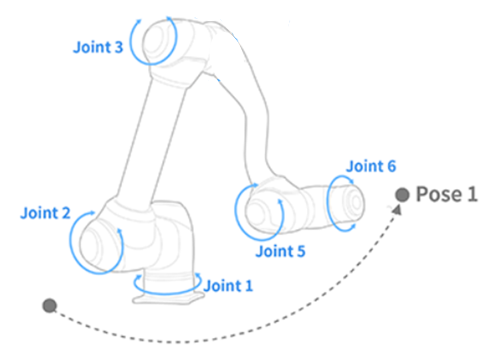
Each joint of the robot moves from the current angle to the target angle and stops simultaneously
|
|
2 |
MoveL |
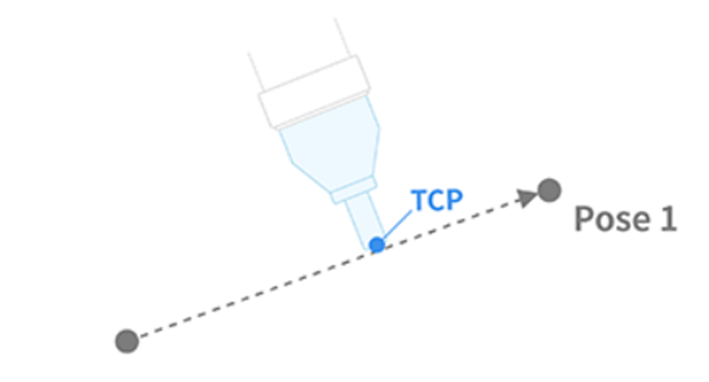
Robot moves to the target point while maintaining the robot TCP straight
|
|
3 |
MoveSJ |
Robot moves throughout all angles set by the robot
|
|
4 |
MoveSX |
Robot TCP moves throughout all points
|
|
5 |
MoveJX |
The robot pose is designated as the robot TCP moves to the target point
|
|
6 |
MoveC |
Robot TCP moves to target point while maintaining an arc 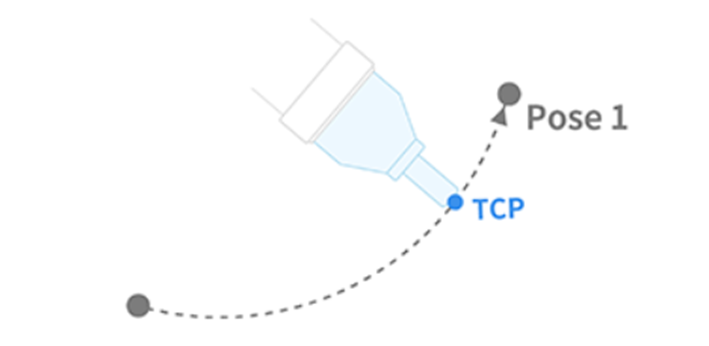
|
|
7 |
MoveB |
Robot moves to the final target point through a section consisting of continuous straight lines and arcs 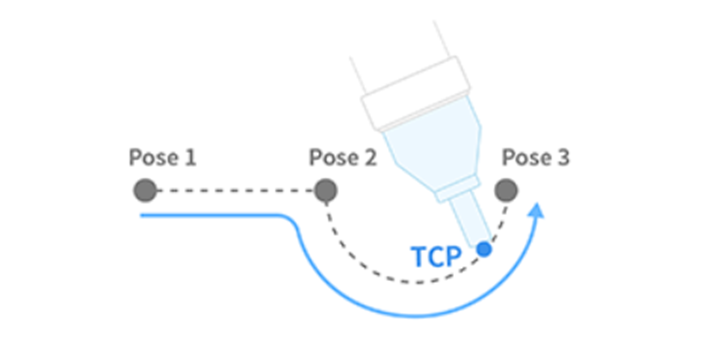
|
|
8 |
MoveSpiral |
Robot moves from the spiral center to the maximum radius 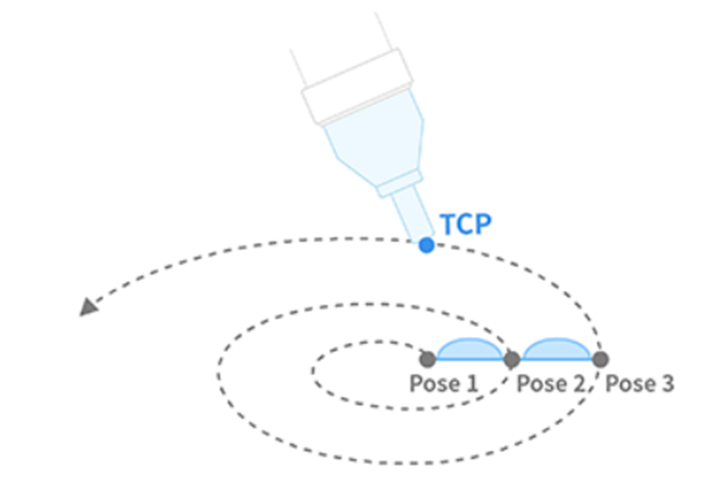
|
|
9 |
MovePeriodic |
Robot moves in a path with a constant amplitude and cycle 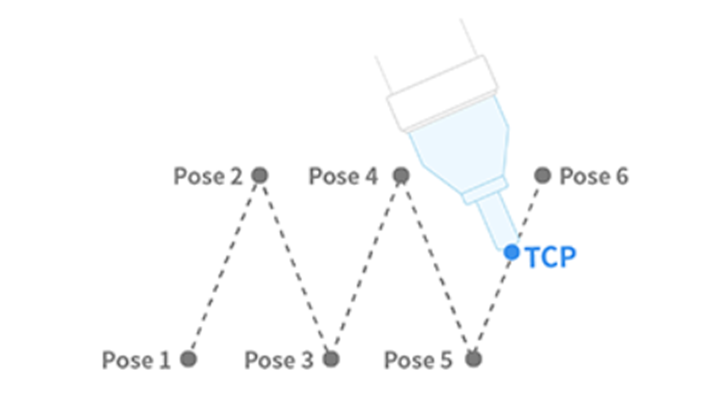
|
MoveJ&MoveL
Before using robot motion, it is critical to understand the standard motions MoveJ and MoveL.
-
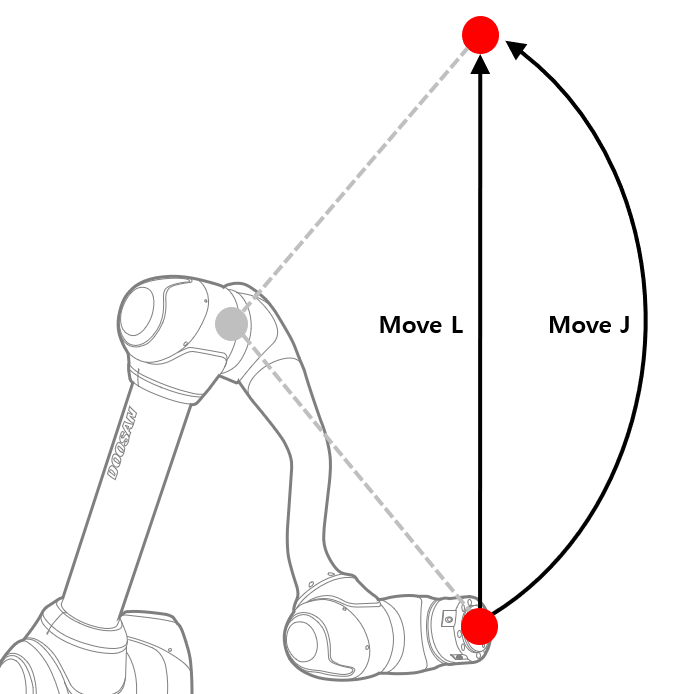
J in MoveJ refers to joints. In this motion, each joint moves to the target angle and stops simultaneously.
-
L in MoveL refers to linear. In this motion, the TCP on the robot end moves to the target pose (position and angle) with linear motion.
|
|
Type |
MoveJ |
MoveL |
|---|---|---|---|
|
1 |
Move Method |
|
|
|
2 |
Advantage |
|
|
|
3 |
Disadvantage |
|
|
|
4 |
Utilization |
|
|